
Master data is the foundation on which procurement, inventory management, maintenance, finance, supply chain, engineering, and ERP processes operate.
But creating accurate master data once is not enough.
As organizations add new materials, suppliers, equipment, plants, locations, products and business processes, master data continuously changes. Without a structured governance framework, data quality gradually deteriorates through duplicate creation, inconsistent descriptions, incomplete technical attributes, incorrect classification, uncontrolled code creation, and inconsistent business rules.
Master Data Governance establishes the people, processes, standards, controls and technologies required to create, maintain, monitor, and continuously improve master data throughout its lifecycle.
For industrial organizations, particularly those managing large MRO and engineering material databases, governance must go beyond administrative approval. It must combine data quality, technical knowledge, business rules, ERP processes, and continuous monitoring.
What is Master Data Governance?
Master Data Governance is a structured framework for managing the quality, ownership, standards, processes and lifecycle of critical master data across an organization.
It defines:
- What data should be created
- How data should be created
- Who is authorized to create or modify it
- Which standards and naming conventions must be followed
- How duplicates are prevented
- How technical attributes are validated
- How classification and taxonomy are maintained
- How data quality is measured
- How deviations are identified and corrected
- How recurrence of data-quality problems is prevented
In an MRO environment, this may include governance of:
Material Master | Spare Parts | Engineering Items | Equipment Master | Vendor Master | Classification | Technical Attributes | UoM | Manufacturer/OEM Data | Material Descriptions | Material Codes
The objective is not simply to “keep data clean.”
The objective is to make master data reliable, usable, searchable, scalable and governed throughout its lifecycle.
Why is Master Data Governance Important?
Poor master data can create problems far beyond the master-data team.
A duplicate material can result in duplicate purchasing.
An incomplete description can make a required spare difficult to identify.

An incorrect unit of measure can create procurement and inventory discrepancies.
An inconsistent classification can affect spend analysis and reporting.
An uncontrolled new-material creation process can gradually recreate the same data-quality problems that a cleansing project originally solved.
Therefore:
Data cleansing can correct historical problems. Master Data Governance prevents those problems from continuously returning.
This is one of the fundamental principles behind the W2W approach.
When Should Master Data Governance Be Implemented?
Master Data Governance is particularly important when an organization is:

Before ERP / SAP S/4HANA Migration
Legacy master data should be assessed, standardized, and governed before migration.

After Master Data Cleansing
Cleansing without governance can result in the gradual re-creation of duplicates and inconsistencies.

During SAP / ERP Transformation
New ERP environments require clearly defined material-creation processes, ownership, standards and approval controls.

During M&A or Multi-Plant Integration
Different plants or business units may follow different naming, coding and classification practices.

During Inventory Optimization
Reliable material identity and technical attributes are essential for identifying duplicate, excess, obsolete and non-moving inventory.
During MRO Procurement Transformation
Standardized master data supports better searchability, spend analysis, purchasing decisions and vendor consolidation.

When Material Creation Volume is Increasing
As the number of new material requests increases, manual and decentralized processes become increasingly difficult to control.
Where is Master Data Governance Applicable?
Master Data Governance can be applied across multiple industrial data domains.
| Data Domain | Governance Focus |
|---|---|
| Material Master | Naming, coding, attributes, classification, duplicates |
| MRO / Spare Parts | Technical specifications, OEM references, interchangeability |
| Equipment Master | Equipment hierarchy, technical identity, asset relationships |
| Vendor Master | Vendor identity, duplication, classification and standardization |
| Product Master | Product attributes, categories and lifecycle |
| Engineering Data | Specifications, drawings, standards and technical references |
| Classification | UNSPSC, customer taxonomy and category structures |
| UoM | Standard units and conversion rules |
| Manufacturer/OEM Data | Manufacturer names, part numbers and references |
For W2W, the primary focus is particularly relevant to MRO Material Master, Engineering Stores, Procurement, Maintenance, and SAP/ERP environments.
Who Benefits Master Data Governance?
Master Data Governance is not only an IT or MDM function.

Procurement
- Better material search
- Reduced duplicate purchasing
- Better spend visibility
- Improved vendor consolidation opportunities
- Standardized purchasing descriptions
Stores & Inventory
- Better stock visibility
- Improved material identification
- Reduced duplicate stock
- Better inventory classification
- Improved inventory optimization

Maintenance & Engineering
- More reliable technical information
- Easier identification of required spares
- Better equipment-material relationships
- Improved spare-parts standardization
SAP / ERP / MDM Teams
- Better master-data quality
- Controlled material creation
- Improved migration readiness
- Defined workflows and authorization
- Reduced recurring data-quality issues
Management
- Better reporting
- Greater confidence in master-data-driven decisions
- Improved process visibility
- Reduced operational risk
- Sustainable data-quality improvement
W2W Master Data Governance Architecture
From Data Quality Assessment to Sustainable Governance
W2W approaches Master Data Governance through a TQM-based continuous improvement framework, translated into the proprietary W2W 4M™ Framework.
W2W 4M™ Framework
1MMeasure
2MModernize
3MMonitor
4MMaintain
| TQM / PDCA | W2W 4M™ | W2W Methodology | Primary Objective |
|---|---|---|---|
| Plan | 1M – Measure | MDQA™ | Understand current data quality |
| Do | 2M – Modernize | ClenzMat Pro™ | Improve, cleanse, standardize and enrich data |
| Check | 3M – Monitor | MDQA™ Validation | Measure improvement and identify deviations |
| Act | 4M – Maintain | Master Data Governance | Sustain quality and prevent recurrence |
This creates a continuous cycle rather than a one-time data-cleansing exercise.
1M
1M – Measure Through MDQA™
Know the Condition of Your Data Before Improving It
The first step is to understand the actual condition of the master data.
MDQA™ – Master Data Quality Assessment evaluates the existing master-data environment and establishes an objective baseline of data quality.
Depending on the business requirement, assessment dimensions can include:
- Duplicate materials
- Description quality
- Data completeness
- Technical attribute completeness
- Classification quality
- Manufacturer/OEM information
- UoM consistency
- Naming-convention compliance
- Material-type consistency
- Missing or inconsistent values
- Governance/process gaps
MDQA™ Output
Existing Data
Assessment
Data Quality Score
Issue Analysis
Risk/Priority
Improvement Roadmap
This allows management to answer:
Where are we today, what is wrong, what is the business impact, and what should be improved first?
W2W principle: Measure Before You Improve.
2M
2M – Modernize Through ClenzMat Pro™
Once the current condition is understood, the next stage is to improve the data.
ClenzMat Pro™ is W2W's platform-supported approach for material master cleansing, standardization, enrichment and new-description creation. As part of the broader W2W master data management approach, we also support the structured creation of new material, vendor, and service codes, along with the modification and standardization of existing master records in accordance with defined business rules and customer requirements.
Modernization can include:
- Duplicate identification
- Material description standardization
- Noun–Modifier–Attribute structure
- Technical attribute enrichment
- Manufacturer/OEM normalization
- Classification
- UoM standardization
- Incomplete-data identification
- Material code analysis
- New material description creation
- Business-rule implementation
- Data validation and approval workflows
The important distinction is that modernization is not simply changing strings in an ERP database.
It is about creating a business-ready material identity that can be understood consistently by procurement, stores, maintenance, engineering and ERP systems.
3M
3M – Monitor Through MDQA™ Validation
A common weakness in data-cleansing projects is that the organization measures the data before the project but does not systematically measure it again afterward.
W2W's 4M model closes this gap.
After modernization, the data is reassessed to determine:
- What improved?
- What remains unresolved?
- Did duplicate levels decrease?
- Did completeness improve?
- Did standardization improve?
- Were classification gaps addressed?
- Did the Data Quality Score improve?
- Are new exceptions being generated?
Pre vs Post Data Quality
Baseline MDQA™
Modernization
Post-MDQA™ Validation
Improvement Measurement
This provides an evidence-based view of improvement rather than relying only on project completion.
4M
4M – Maintain Through Master Data Governance
The final stage is where sustainable improvement is created.
Maintain means embedding data-quality controls into the organization's everyday processes.
This can include:
Governance Structure
- Data owners
- Data stewards
- Process owners
- Technical validators
- Approvers
- Governance authority
Process Governance
- New material, vendor, and service code creation workflow
- Change-management process Existing master code modification and update procedures
- Duplicate-search requirement Duplicate checks before new code creation
- Technical validation Technical and business validation before approval
- Approval matrix and audit
- Exception management
- Data retirement/deactivation rules

Standards Governance
- Naming conventions
- Material description standards
- Attribute standards
- Classification rules
- Manufacturer/OEM standards
- UoM standards
- Coding rules
- Reference-data libraries
Continuous Monitoring
- Data Quality Score
- Duplicate monitoring
- Completeness monitoring
- Standardization compliance
- New-material audit
- Exception reporting
- Periodic MDQA™ reassessment
The objective is simple:
Do not allow tomorrow's data-quality problems to recreate yesterday's problems.
Why Is the W2W 4M™ Framework Different?
Many organizations treat master-data improvement as a one-time cleansing project.
W2W treats it as a continuous data-management lifecycle.
Conventional Approach
Identify Problems
Clean Data
Upload to ERP
Project Ends
The risk is that the same weaknesses in material creation, standards and approvals remain in the organization.
W2W 4M™ Approach
Measure
Modernize
Monitor
Maintain
Repeat
The framework connects:
Assessment + Improvement + Validation + Governance
This creates a closed-loop approach to master-data quality.
What Makes the W2W Approach Different?
1
Measure Before You Improve
W2W starts with MDQA™, establishing a measurable baseline rather than immediately starting cleansing.
2
MRO Domain Understanding
Industrial MRO master data has unique complexities:
- OEM part numbers
- Engineering terminology
- Equipment-specific descriptions
- Multiple technical specifications
- Local terminology
- Legacy descriptions
- Catalogue references
- Multiple UoMs
- Interchangeability considerations
- Criticality-related information
The governance framework therefore considers business and technical context, not only database fields.
3
Technology + Human Intelligence
W2W combines platform capabilities with domain expertise.
Technology identifies patterns.
Rules create consistency.
Domain experts validate technical meaning.
This is particularly important for complex MRO materials where a purely automated similarity check may not establish technical equivalence.
4
Data Quality Is Measured Again
W2W does not stop after cleansing.
Pre-MDQA™
Modernization
Post-MDQA™
The organization can see measurable improvement.
5
Governance Is Part of the Solution
The objective is not simply:
“Clean the existing 500,000 records.”
The larger objective is:
“Create a system that makes it difficult to create the next 500,000 bad records.”
What Value Does Master Data Governance Create for Customers?
The value should be communicated in business terms, not only data terms.
Better Procurement Decisions
Standardized and searchable materials make it easier to identify existing materials before creating or purchasing new ones.
Reduced Duplicate Material Creation
Controlled workflows and duplicate checks reduce unnecessary material creation.

Better Inventory Visibility
A common material identity improves the ability to analyze stock across plants, locations and systems.

Improved Reporting
Consistent classifications, descriptions and attributes provide a stronger foundation for procurement and inventory analytics.
Improved ERP / SAP Readiness
Governed master data supports ERP migration, harmonization and transformation initiatives.

Lower Recurrence of Data Problems
Governance addresses the process and control mechanisms responsible for recurring data-quality issues.

Better Cross-Functional Collaboration
Procurement, maintenance, engineering, stores, IT and master-data teams work from common definitions and standards.
The W2W Master Data Governance Value Chain
ASSESSMDQA™
MEASURE
IMPROVEClenzMat Pro™
MODERNIZE
VALIDATEPost-MDQA™
MONITOR
CONTROLGovernance + Workflow + Standards
MAINTAIN
Result:
Trusted Master Data
Better Processes
Better Decisions
Sustainable Business Value
From One-Time Cleansing to Continuous Data Quality
A strong conceptual statement for the page would be:
Master Data Cleansing fixes existing data problems. Master Data Governance controls how data is created, changed and maintained so those problems do not continuously return.
This gives W2W a clear distinction between your data-cleansing services and your governance proposition.
Master Data Governance Sub-Services
Select a service to view its details:
New Material Code Development
Accelerate Innovation with Precise, Standardized Material Master Data
Mass Material Codification
Transform your Historical Data into a Powerful Business Asset.
MRO Product Classification
Build a Smarter Inventory with MRO Classification.
What is New Code Development?
At W2W Service, we redefine how organizations create, manage, and control their master data. Our New Code Development solution empowers businesses to eliminate chaos, accelerate workflows, and bring absolute precision to their Material, Vendor and Service Masters.
Whether you're launching new products, onboarding suppliers, optimizing SAP Material Master/Vendor Master/Service Master, or scaling across multiple locations, our service ensures every new code is accurate, standardized, duplicate-free, and ERP-ready, and aligned with your organizational standards with global best practices.
Key Features of New Code Development
Centralized Material Master Management
A unified engine for all new code creation-no duplication, no inconsistencies, no bottlenecks. We ensure full control across multi-user and multi-location environments.

Intelligent Request Processing
Our smart intake workflow captures all required attributes from stakeholders upfront-eliminating back-and-forth delays and enabling fast, accurate code creation.
Duplicate Check & Validation
Using advanced algorithms and data-cleansing checks, we guarantee every code-material, vendor, equipment, or service-is unique, validated, and compliant.

Category & Attribute Alignment
We align newly created codes with your taxonomies and international standards, ensuring seamless integration into procurement, inventory, reporting, and compliance structures.

SLA-Driven Delivery
Speed matters. Our time-bound SLAs ensure rapid creation, review, and activation so your supply chain never slows down.

Data Quality Tools
Our proprietary tools validate accuracy, completeness, and relevance of every submitted entry before onboarding into SAP/ERP/MRP systems.

MIS Reporting
Every action is traceable. Every creation is reportable. Full transparency with monthly MIS dashboards.
Why Choose W2W?
- Unmatched Domain Expertise - We’ve mastered the art of building clean, scalable, and business-ready Master Data for global organizations.
- Custom Workflows Built for Your Business - From approval chains to attribute requirements-your rules become our rules.
- Zero-Downtime Service - Non-stop delivery. No delays due to manpower shortages, leaves, or holidays.
- Priority Handling for Critical Requests - Urgent codes get fast-tracked to keep operations running uninterrupted.
Business Impact You Can Measure
- Reduced procurement waiting time
- Increased inventory accuracy
- Elimination of duplicate or incorrect material entries
- Stronger ERP data integrity
- Faster product launches and supplier onboarding
- Higher operational agility and reduced costs
What is Mass Material Codification from P&ID, BOM, & Projects?
Currently, global economic growth is proceeding at an accelerated pace, leading to rapid development in almost every country. Amidst this progress, each sector within the industrial landscape is experiencing significant expansion.
As industries expand, they embrace new equipment, expand existing facilities, adopt advanced production technologies, or undertake greenfield projects to enhance productivity. Throughout these endeavours, each industry adheres to its distinct set of operational systems. While following these protocols, there is a heightened demand for manpower, expertise, and technology, particularly within defined timeframes.
Recognizing this need of the hour, our company has introduced a range of services specifically designed to benefit every sector and operational framework. And our mass material codification (also known as bulk data generation) services are one amongst those. Leveraging our deep domain knowledge, experience, and skillsets, we generate substantial data for our customers in remarkably short timeframes. This includes essential data such as material codes, vendor codes, and service codes. The ultimate goal is to empower the client industry to significantly reduce the cycle time of their subsequent business processes.
Let us help you transform messy material master data into a structured, searchable, and optimized asset. With our classification services, your inventory becomes a competitive advantage-not a liability.
What is MRO Product Classification?
MRO Product Classification is the process of organizing and standardizing inventory items-such as spare parts, tools, consumables, and maintenance materials-using a consistent taxonomy. This includes:
- Assigning a standard naming convention
- Grouping items into defined categories (UNSPSC, HSN or custom)
- Enriching data with attributes and technical specifications
- Eliminating duplicates and obsolete items
Optimize Your Inventory with Accurate MRO Product Classification
In industrial environments, unstructured and inconsistent MRO (Maintenance, Repair, and Operations) data can cause procurement errors, stock duplication, and unnecessary spend. At W2W, we help businesses bring structure, standardization, and clarity to their inventory systems with our expert MRO Product Classification services.
Our process ensures each material item is accurately named, grouped, and codified—providing a solid foundation for efficient inventory management and smarter decision-making.
Why MRO Classification is Essential?
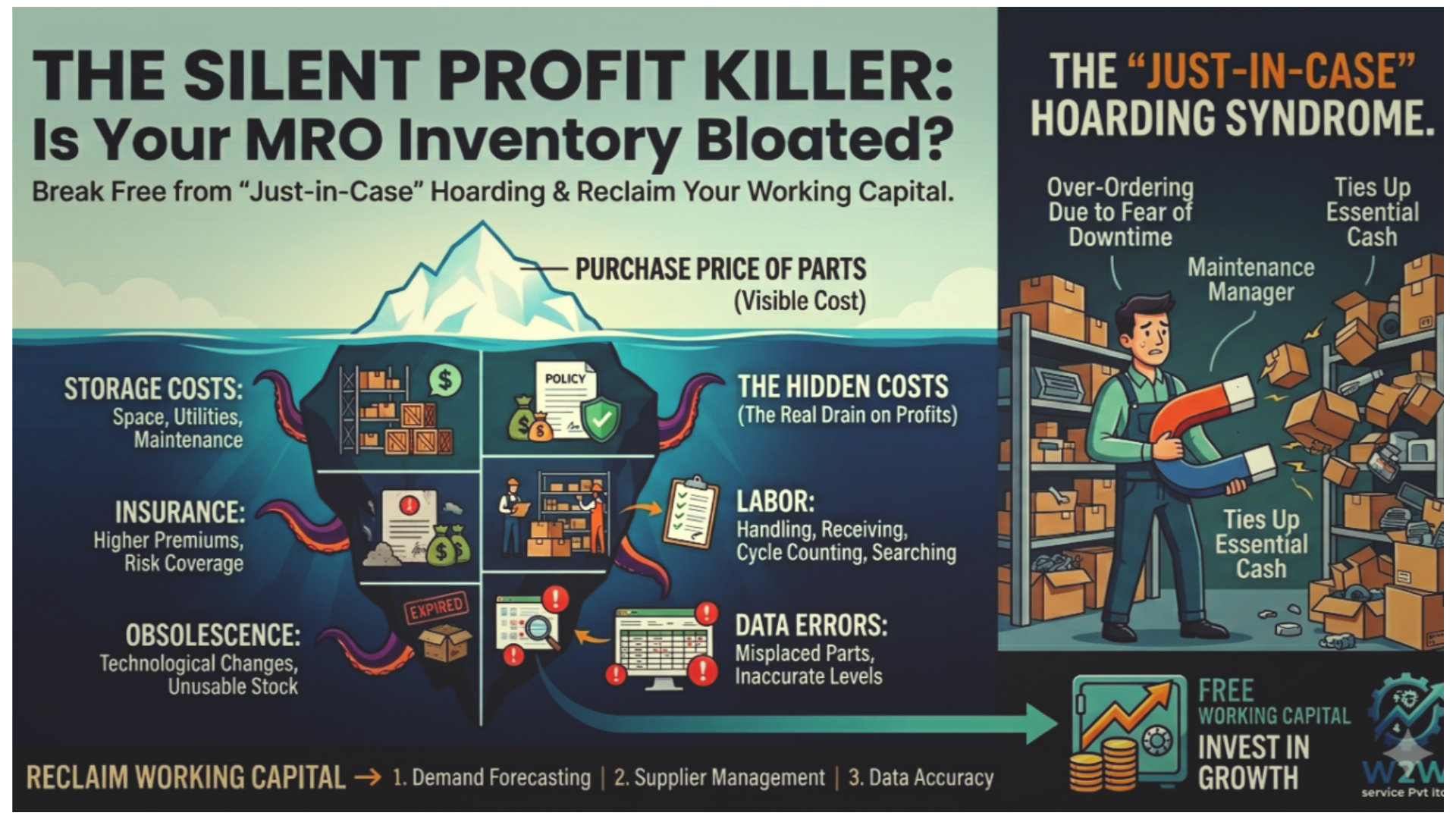
- Over-purchasing and stock duplication
- Inaccurate inventory valuation
- Delays in part identification and procurement
- Increased downtime due to missing or incorrect parts
- Ineffective supplier negotiations due to poor visibility
Proper classification solves these issues and provides a strategic edge.
Key Benefits of MRO Classification
Improved Inventory Visibility
Locate the right part, at the right time, with the right specs

Reduced Procurement Costs
Avoid unnecessary purchases and leverage buying power
Optimized Inventory Levels
Eliminate redundancies and free up working capital

Faster Maintenance Turnaround
Empower maintenance teams with accurate item descriptions

Data-Driven Decision-Making
Reliable, structured data for analytics and reporting

ERP System Optimization
Boost searchability and usability of material masters
Why Choose W2W?
- Industry-Specific Knowledge - Deep understanding of engineering and industrial MRO
- Technical Expertise - Engineers and data specialists collaborate for accurate classification
- Custom or Standard Taxonomies - We align to your system or global standards
- Tool-Based Approach - We use advanced tools for cleansing, mapping, and validation
- End-to-End Support - From audit to final ERP deployment
Case Study (Real Impact)
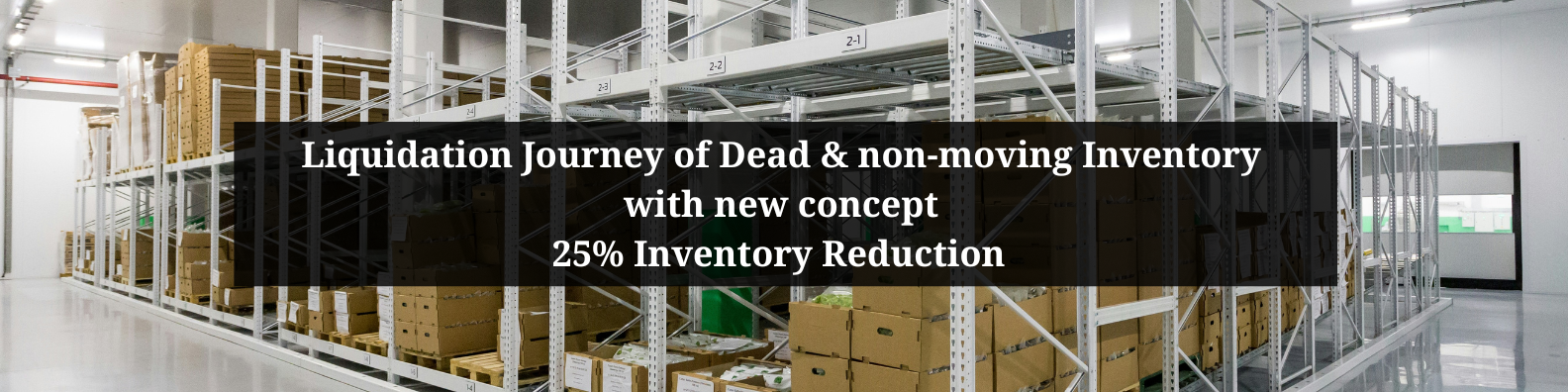
A leading manufacturing client achieved 66% SKU reduction in & 9% Inventory Reduction leading to improvement in procurement cycle time, and significant cost savings through our structured implementation approach.

Have questions about master data governance?
Find quick answers to the most common questions.
Go to FAQsRelated Services
To strengthen your data ecosystem, explore:
These services work together to ensure complete data accuracy and operational efficiency
Get started with your Master Data Governance Journey with us!
© 2026, W2W Service Pvt Ltd